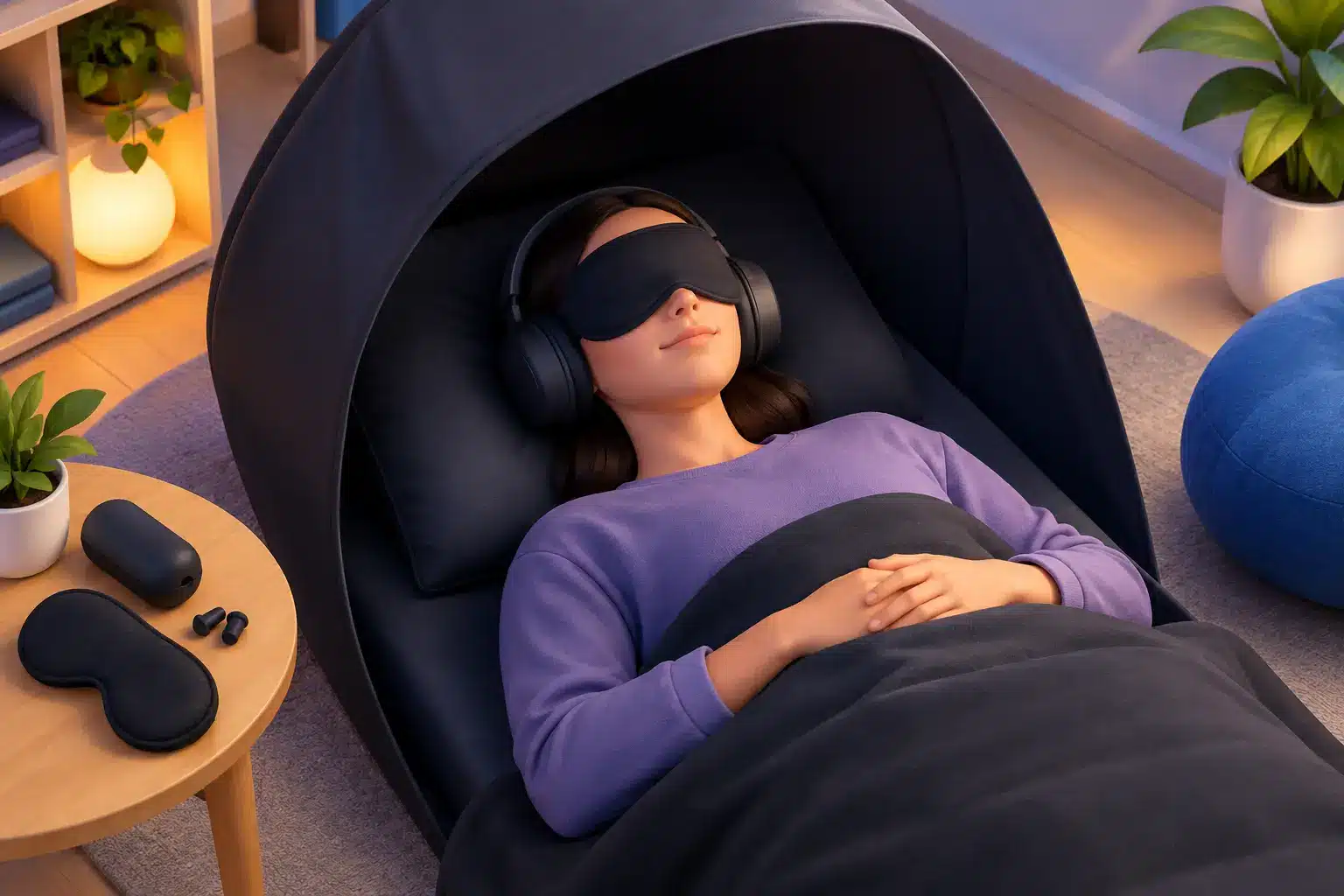
A Beginner’s Guide to Sensory Deprivation Play
A blindfold can turn a familiar kiss, a feather-light touch, or the click of a favorite toy into something far more intense. That is the appeal behind sensory deprivation play: when one sense gets quieter, the body often pays closer attention to the others. This guide to sensory deprivation play is for curious adults who want to explore that anticipation safely, confidently, and with plenty of room for pleasure.
Sensory play does not need to be extreme to feel exciting. A soft sleep mask, a carefully chosen playlist, a cool massage oil, or a whispered instruction can shift the mood fast. The best experiences are built around trust, communication, and a pace that leaves everyone eager for the next touch.
What Is Sensory Deprivation Play?
Sensory deprivation play is consensual adult play that reduces or changes access to one or more senses. Most people start with sight, using a blindfold or eye mask. Others add sound through headphones, earplugs, or music, then play with contrast through touch, temperature, scent, and taste.
The point is not to leave someone confused or helpless. It is to create focused anticipation. When a partner cannot see where your hands are going, a touch on the thigh can feel unexpectedly electric. When they are listening to a playlist instead of every movement in the room, a slow stroke or a new texture can land with more impact.
For some people, this kind of play feels romantic and teasing. For others, it taps into a BDSM dynamic involving control, surrender, and permission. Both approaches are valid. What matters is that every person involved is informed, enthusiastic, and able to stop the scene.
Start With Consent Before the Blindfold Goes On
The hottest part of sensory deprivation play is often the trust behind it. Have the conversation while everyone is dressed, relaxed, and clear-headed, not halfway through an encounter. Talk about what sounds exciting, what is off-limits, and whether the mood is gentle, playful, commanding, or somewhere in between.
Ask practical questions too. Does your partner have anxiety, trauma triggers, hearing concerns, claustrophobia, migraines, skin sensitivities, or a condition that may make certain sensations uncomfortable? A person who loves a blindfold may hate having sound reduced. Someone else may enjoy silence but dislike unexpected cold. There is no universal formula, and guessing is not a substitute for asking.
Choose a safeword that is easy to remember. Because speech may be harder to use with a gag, loud music, or headphones, agree on a nonverbal stop signal as well. A common option is holding a small object that can be dropped or tapping repeatedly on a partner’s hand or leg. Test the signal before play begins, and make sure the person giving it can be heard, seen, or felt immediately.
Avoid combining sensory restriction with anything that compromises breathing, circulation, or the ability to communicate. Skip breath play entirely. Keep keys or safety shears accessible if restraints are involved, and never leave a restrained or blindfolded person alone.
Build Your First Scene One Sense at a Time
For beginners, less is usually more. Start with a blindfold alone and keep the rest of the environment familiar. Let the blindfolded partner know where they are, what position they will be in, and that you will check in regularly. A comfortable bed or couch, a warm room, and a glass of water nearby set a far better stage than trying to make the scene complicated.
A soft, adjustable eye mask is often more comfortable than a tied scarf because it is easy to remove quickly and does not put pressure on the eyes. Check that it does not block the nose or feel overly tight. Before touching your partner in a more intimate way, begin with simple contact: hold their hand, stroke their hair, kiss their shoulder, or place your palm against their back. This reassures the nervous system while building suspense.
Once sight is removed, introduce one new sensation at a time. Trace a fingertip down the arm. Use a silky fabric across the stomach. Alternate a warm hand with a cool metal spoon that has been brought to a safe, comfortable temperature. A body-safe massage candle or oil can add glide and warmth, but test temperature and products on your own skin first.
If you want to bring in toys, keep them familiar at first. A gentle vibrator, teasing feather, soft flogger, or textured massage accessory can create delicious contrast without overwhelming the person receiving. Let the blindfolded partner know if a toy is entering the scene, even if you do not reveal exactly which one. Mystery should feel exciting, not alarming.
Sound Can Raise the Stakes, With a Few Rules
Sound changes the atmosphere quickly. A slow playlist can cover small movements and make every whisper feel closer. Noise-canceling headphones can heighten anticipation, but they also make verbal check-ins less reliable. If you use them, stay physically close and rely on the nonverbal signal you practiced earlier.
For a first experience, music is often a better choice than full silence or earplugs. It keeps the person grounded while still changing what they can notice. You can also use sound as part of the tease: whisper from different positions, lightly tap a nearby surface, or let a toy hum before it touches the skin.
Do not surprise someone with loud sounds. A sudden clap, sharp command, or high-volume track may be thrilling for an experienced partner who requested it, but it can be jarring for a beginner. Set volume limits in advance and keep one ear free if that helps a partner feel more secure.
Choose Sensations That Match the Mood
Sensory deprivation is all about contrast. Soft versus firm. Warm versus cool. Stillness versus vibration. The more deliberate you are, the less equipment you need.
For a sweet, sensual scene, think plush blindfolds, scented massage oil, slow kissing, satin restraints, and gentle vibration. For a bolder power-play mood, add clear instructions, light bondage, a blindfold, and a consensual teasing rhythm that makes your partner wait. If your partner likes impact, start with a soft paddle or flogger and agree on body areas, intensity, and a check-in plan before the first strike.
Watch for real-time feedback even when your partner cannot see you. Changes in breathing, muscle tension, silence, pulling away, or a dropped signal are reasons to pause. Do not assume a lack of protest means enthusiasm. Slow down, check in, and make it easy for your partner to say, “Not that,” or “More of that.”
A Simple Guide to Sensory Deprivation Play at Home
A first scene can be wonderfully simple: start with ten or fifteen minutes, choose one blindfold, and select two or three touch sensations. For example, use your hands, a soft accessory, and a vibrator. Tell your partner that you will stay nearby, check in by touch, and remove the blindfold the moment they want it off.
Set the mood before the scene begins. Charge toys, lay out towels if you are using oil or lube, lower the room temperature only if it is comfortable, and put phones on silent. This is not about a picture-perfect setup. It is about avoiding interruptions that pull either person out of the moment.
A simple traffic-light system works well alongside a safeword. Green means keep going. Yellow means slow down, reduce intensity, or check in. Red means stop immediately. If words are not practical, create touch equivalents, such as one squeeze for green, two for yellow, and a repeated tap for red. Agree on them together, not in the heat of the moment.
Aftercare Keeps the Experience Connected
When the blindfold comes off, do not rush straight into chores or scrolling. Sensory play can leave someone relaxed, emotional, energized, or surprisingly vulnerable. Offer water, a blanket, cuddling, a snack, or quiet space depending on what your partner prefers.
Talk briefly about what worked. Was the blindfold exciting or distracting? Did the cool touch feel amazing? Was the music too loud? This is not a performance review. It is how you learn each other’s signals and make the next scene even better.
Clean toys and accessories according to their material and care instructions, then store them where they are ready for another private night in. If you are building your collection, LoveShop offers plenty of playful options, from blindfolds and bondage accessories to massage products and couples’ toys, so you can choose a setup that suits your comfort level.
The best sensory deprivation play leaves both people feeling seen, even when one of them could not see a thing. Start small, stay curious, and let consent be the detail that makes every tease feel better.