


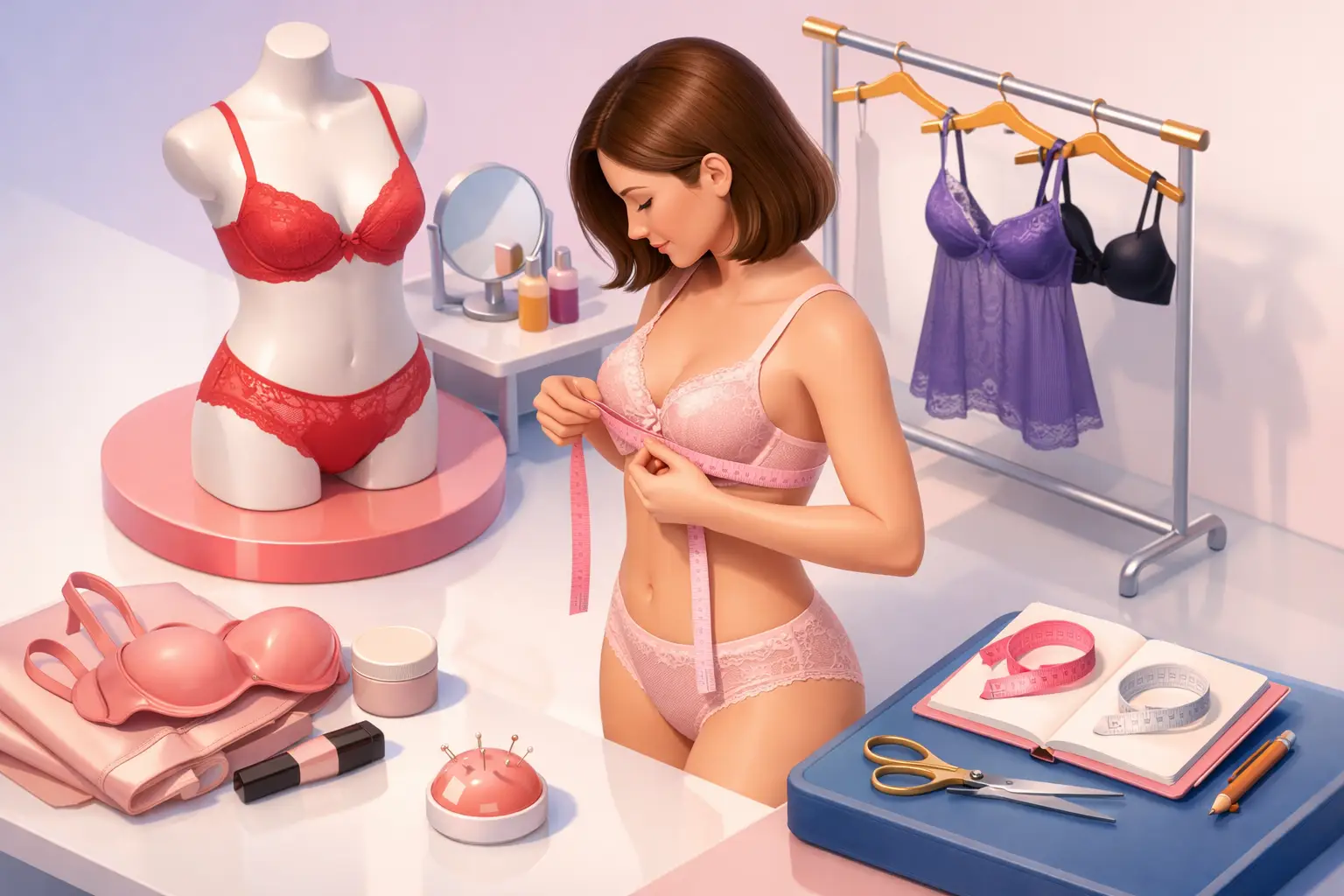
How to Measure for Lingerie That Fits
Buying lingerie should feel exciting, not like a guessing game with elastic. If you’ve ever ordered a bra that pinched, a teddy that pulled in all the wrong places, or panties that looked perfect online but fit strangely in real life, learning how to measure for lingerie fixes a lot of that fast.
The good news is that you do not need a fitting room, special training, or a long afternoon. A soft measuring tape, a mirror, and a few minutes are usually enough to get numbers you can actually shop with. And once you know what to measure, sizing gets a lot less mysterious.
How to measure for lingerie at home
Start with the basics. Measure over bare skin or very thin clothing, and stand naturally instead of sucking in or pushing your chest up. Lingerie is meant to fit your body, not the version of your body you hold for three seconds in the mirror.
A soft tape measure is best because it follows curves more accurately. If you do not have one, a string and a ruler can work, but it is easier to make mistakes that way. Keep the tape level all the way around, and make sure it sits snugly without digging in.
If possible, take each measurement twice. Bodies shift, tape measures slip, and one extra check can save you from ordering the wrong size.
Measure your bust
Wrap the tape around the fullest part of your bust. This is usually across the nipples and around the shoulder blades. Keep your arms relaxed at your sides and make sure the tape is straight across your back.
This number matters for bras, bralettes, chemises, teddies, and bodysuits. If you are between numbers, round according to the brand’s size chart, not just instinct. Some styles are forgiving, while others, especially structured pieces, are not.
Measure your underbust
For bras and some corset-inspired styles, your underbust measurement is just as important as your bust. Wrap the tape directly under your breasts where the bra band would sit. It should feel firm, because the band is what gives most bras their support.
Do not measure this too loosely. A band that feels okay for ten seconds in your bedroom can feel frustrating after an hour of wear.
Measure your waist
Your natural waist is usually the narrowest part of your torso, often just above the belly button. Bend slightly to one side if you are not sure where it is – the crease that forms is a useful guide.
This measurement is key for high-waist panties, garter belts, corsets, shaping lingerie, and many bodysuits. If a style is designed to sculpt or cinch, the waist measurement often matters more than shoppers expect.
Measure your hips
Measure around the fullest part of your hips and butt. Keep your feet together and the tape parallel to the floor. This helps with panties, thongs, shorts, bodysuits, and open-back pieces that still need to sit smoothly through the lower half.
If your hip and waist measurements fall into different sizes, pay attention to the cut of the item. Stretch lace and mesh may let you size for your waist, while less forgiving fabrics may need you to size for your hips.
Measure your torso for one-piece lingerie
For bodysuits, teddies, and some strappy one-piece designs, torso length can make the difference between flattering and impossible. Start at the top of one shoulder, run the tape down the front of your body, through the legs, and up the back to the same shoulder.
This is especially helpful if you are taller, have a longer torso, or have had that classic problem where a bodysuit looks great until it starts pulling downward. One-piece lingerie is often where standard sizing gets tricky.
How to measure for lingerie bras and bralettes
Bra sizing can feel more complicated than it needs to be, but the basic idea is simple. Your band size comes from your underbust measurement, and your cup size comes from the difference between your bust and underbust.
Different brands calculate cup sizes a little differently, so always check the size chart for the specific piece. A 34C in one label may fit differently from another, and bralettes are even less standardized. Many are sold as S, M, L, or XL rather than traditional bra sizes.
If you are shopping for a soft lace bralette, you usually have more flexibility. If you are buying an underwire bra, balconette, or push-up style, precision matters more. Structured cups, molded shapes, and less stretch mean less room for sizing mistakes.
A quick fit reality check helps too. If the band rides up, it is usually too loose. If cups gape, they may be too large or the shape may be wrong for your bust. If tissue spills out at the top or sides, the cup is probably too small.
Measuring for panties, thongs, and crotchless styles
Bottoms are usually more straightforward, but not always easier. Your waist and hip measurements are the starting point, and then the fabric and cut decide how much flexibility you have.
A stretchy thong or mesh panty can often work across a broader range of bodies. A strappy cutout style, vinyl piece, or barely-there crotchless design may need a more exact fit so the straps hit in the right place. If you are between sizes, think about comfort first. Too small usually feels worse than slightly relaxed.
Rise matters too. A low-rise thong and a high-waist brief can fit very differently even if they are technically the same size. The more coverage or structure a bottom has, the more useful your actual measurements become.
Teddies, chemises, corsets, and babydolls
These are the styles that tempt people to guess, and they are also the styles where guessing can backfire.
A chemise or babydoll often has more ease through the body, so bust size tends to be the deciding factor. If the bust fits, the rest may skim nicely even if your waist or hips fall a little outside one size bracket. That makes these styles a solid choice if you want a forgiving fit.
Teddies and bodysuits are less forgiving because they combine bust, waist, hips, and torso length in one piece. If one area is off, the whole fit can feel wrong. That does not mean they are hard to buy – it just means measurements matter more.
Corsets and bustiers deserve extra attention. These pieces are meant to shape the body, so the waist measurement is often the lead number. But cup space, underbust support, and torso length still matter. If you want a dramatic cinched look, size guidance is essential. If you want something sensual and wearable for longer stretches, a slightly less aggressive fit may be the better move.
Common sizing mistakes that ruin the fit
The biggest mistake is measuring too tightly because you want a smaller number. Lingerie is not improved by wishful thinking. A too-small size can create digging, rolling, flattening, and constant adjusting, which is not exactly the mood.
The second mistake is ignoring fabric. Stretch lace, mesh, satin, faux leather, and vinyl all behave differently. A size that works in soft stretch fabric may feel completely different in a more rigid style.
The third is assuming all brands size the same. They do not. Even when the label says medium, the actual fit can vary depending on the cut, the material, and whether the piece is built for support, seduction, or both.
What to do if you are between sizes
This is where fit becomes personal. If you like a close, body-hugging look and the fabric has good stretch, the smaller size may work. If the piece has underwire, boning, snaps, or less give, sizing up is often smarter.
Think about how you want to wear it. For a quick reveal or a special occasion, a firmer fit might feel fine. For a long night, lounging, or layering under clothes, comfort becomes the better guide.
Adjustable straps, hook closures, lace-up backs, and stretchy panels can also give you more room to work with. These features are worth paying attention to when you are choosing between two sizes.
A few fit checks after it arrives
Once your lingerie is on, move around. Sit down, lift your arms, turn sideways, and walk a few steps. Great fit is not just about how it looks standing still in front of a mirror.
The bust should feel supported or intentionally relaxed, depending on the style. The waist should sit where it is meant to sit. The leg openings should stay in place without cutting in. And nothing should require constant fixing every two minutes.
If a piece is close but not perfect, adjustable elements may solve it. If the whole shape feels wrong, the issue may be the cut, not your body. That is worth remembering because lingerie sizing is not universal, and some designs are simply made with different proportions in mind.
Good lingerie starts with good measurements, but the real goal is confidence. Once you know your numbers, shopping gets faster, fit gets better, and you can spend less time second-guessing sizes and more time choosing what feels sexy, comfortable, and completely worth wearing.