


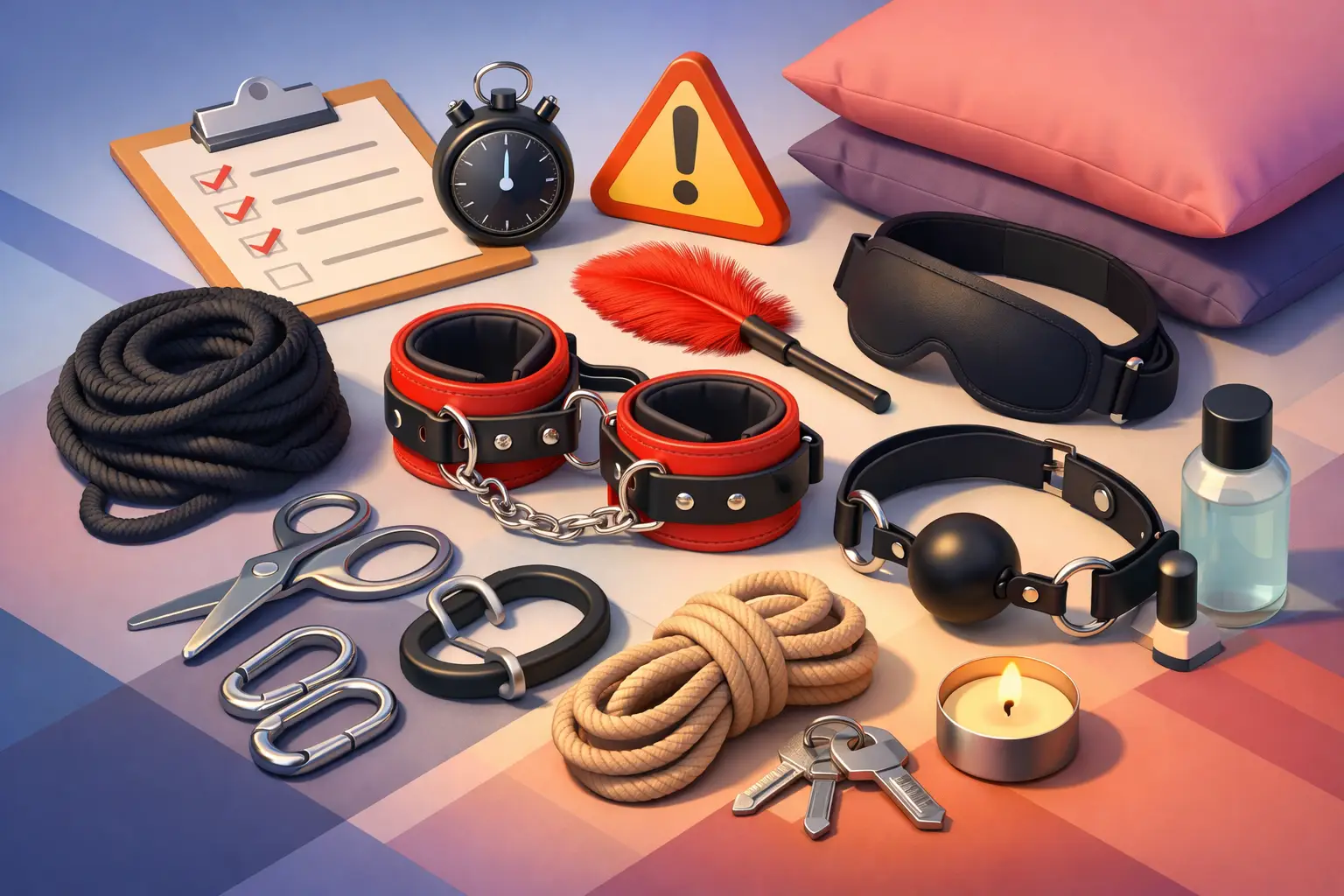
10 Bondage Safety Tips for Better Play
A silk scarf and a pair of fuzzy cuffs can look simple enough, but bondage changes fast once pressure, position, and adrenaline enter the room. The best bondage safety tips are not about killing the mood. They are what let you relax, play harder if you want to, and stay confident that everyone involved can stop, adjust, or switch gears at any moment.
For some couples, bondage is a first step into BDSM. For others, it is already part of the routine, right alongside toys, lingerie, and dirty talk. Either way, safety is not a bonus feature. It is part of good sex. If the setup is rushed, the restraint is wrong for the body or the scene, or communication is vague, a sexy idea can turn uncomfortable very quickly.
Bondage safety tips start before anyone gets tied up
The safest scene usually begins with a conversation that feels surprisingly unglamorous. What are you trying tonight? Wrist restraint only, or full-body restraint? Is the goal teasing, sensory play, orgasm control, photography, or power exchange? Those details matter because a soft under-the-bed restraint kit is a very different experience from rope bondage, spreader bars, or posture-focused restraints.
This is also where limits need to be specific. Saying “be gentle” is not enough. Say what is off-limits, what body parts are sensitive, what words or roles are a turnoff, and what would make someone want to stop immediately. If one partner is new, keep the first scene simple. Novelty can be exciting, but stacking too many variables at once makes it harder to notice when something is going wrong.
A safeword helps, but so does a backup plan. The traffic light system works well because it is easy to remember. Green means good, yellow means slow down or check in, and red means stop. If gagging or any play that limits speech is involved, agree on a nonverbal signal too, such as dropping an object or tapping repeatedly.
Choose restraint gear for safety, not just the look
A lot of bondage gear is sold for style first and performance second. That does not automatically make it unsafe, but it does mean you should look at construction, adjustability, and release options before getting distracted by lace, leather, or shiny metal hardware.
For beginners, wide cuffs with soft lining are usually easier on the skin than thin cords, zip ties, or improvised household items. Rope can be amazing in experienced hands, but it comes with a steeper learning curve. Thin rope, rough rope, or decorative rope used without technique can pinch skin, compress nerves, and create pressure points faster than people expect.
Quick-release options matter. If you cannot get someone out of the restraint quickly, the setup is already less safe. Keep safety scissors nearby for rope scenes. For cuffs or under-bed systems, test the closures before play starts. A sexy bargain is not such a bargain if the buckles stick or the clips jam.
Cleanliness matters too. Gear that sits against skin, genitals, or sweaty areas should be cleaned according to the material. Good maintenance is part hygiene, part product longevity, and part common sense.
Never tie and forget
Bondage is active play, even when the tied partner looks still and serene. Circulation and nerve issues do not always announce themselves dramatically. Sometimes the first clue is subtle: tingling fingers, numbness, cold skin, unusual paleness, or a hand that starts turning red or bluish.
Wrists and ankles need special care because nerves and blood vessels are close to the surface. If restraints are too tight, too narrow, or pressing in the wrong spot, problems can appear quickly. A common beginner mistake is thinking tighter equals safer because the restraint will not slip. Usually, smarter placement and better gear are safer than simply tightening harder.
Check in often, especially during the first several minutes. Ask direct questions. How do your hands feel? Any tingling? Can you wiggle your fingers? Does anything feel sharp, pinchy, or hot? If the tied partner says something feels off, do not negotiate with it. Stop and adjust.
Position can be riskier than restraint
People often focus on what is tying the body and forget to think about what the body is being asked to do. Position affects breathing, joint stress, circulation, fatigue, and balance. A restraint that feels fine on a bed can feel entirely different standing up, kneeling, or bent over furniture.
For beginners, positions that allow natural breathing and easy support are the smartest place to start. Lying down or sitting with the body supported is usually lower risk than standing restraint, suspension, or anything that puts major strain on shoulders, neck, or knees. If a position cannot be held comfortably without restraint, adding restraint will not improve it.
Never leave a restrained person unattended, even for a minute. That includes stepping away to answer the door, take a phone call, or grab batteries from another room. Bondage reduces a person’s ability to protect themselves if they slip, panic, cramp, or feel faint.
Bondage safety tips for rope play
Rope deserves its own warning because it blends beauty with real technical risk. It can create elegant patterns, intense psychological tension, and deeply erotic restriction, but it can also cause nerve compression if used carelessly.
If you are new to rope, start with simple, non-load-bearing ties and avoid complex chest harnesses, neck rope, or anything that places pressure near joints and nerve pathways until you have proper education and practice. Do not improvise from a sexy photo. A pose that looks easy in a picture may be uncomfortable or unsafe in real life.
Keep a close eye on hands and feet for color and temperature changes. Avoid leaving the same tie in place for too long. If you are unsure whether a tie is too tight, untie and redo it. Pride has no place here. Good rope play is not about suffering through a mistake because the pattern looks nice.
Suspension is not beginner territory. It carries much higher risk and should not be treated as the natural next step after bedroom restraint.
Add-ons change the risk level
A scene with cuffs alone is one thing. A scene with cuffs, a blindfold, a vibrator, spanking, and a gag is another. Every added element can increase intensity while reducing the restrained partner’s ability to communicate, shift position, or monitor their own body.
Blindfolds heighten anticipation, but they also make balance and orientation harder. Gags can be hot, but they require extra caution because they limit speech and can complicate breathing or saliva management. Impact play can pair beautifully with bondage, but restrained muscles and fixed positions may become more sensitive faster than expected.
The more variables you combine, the more conservative the scene should become in other ways. Shorter duration, easier release, frequent check-ins, and simpler body positions are all smart trade-offs.
Alcohol, fatigue, and pain tolerance can distort judgment
A drink or two may feel relaxing, but bondage is one of those activities where clear communication and body awareness matter more than liquid courage. Alcohol, recreational substances, and even extreme tiredness can make it harder to notice numbness, delayed pain, dizziness, or emotional discomfort.
Excitement can do something similar. Adrenaline and arousal can mask warning signs in the moment, which is why people sometimes discover bruising, joint strain, or rope marks later and wonder when it happened. This does not mean every mark is a disaster. It means you should not rely on arousal alone to tell you whether a scene is going well.
If either person feels foggy, overly emotional, or physically run down, scale back. There is always another night.
Aftercare is part of bondage safety
Once the restraints come off, the scene is not over just because the sexy part peaked. Bodies need a moment to reset. So do nervous systems. Even a light bondage session can leave someone shaky, floaty, thirsty, emotional, or suddenly tired.
Aftercare can be as simple as cuddling under a blanket, offering water, checking for sore spots, and talking about what felt amazing and what did not. If marks are present, look at them in good light. Mild temporary impressions can be normal, especially with cuffs or rope, but persistent numbness, severe pain, swelling, or unusual discoloration are signs that something went beyond ordinary play and should be taken seriously.
This is also the best moment to learn. Which restraint was comfortable? Which position felt awkward? Did the safeword system work? Smart adjustment is what turns a nervous first try into confident future play.
The best bondage safety tips are usually the least flashy
Good bondage is rarely about pushing to the edge on night one. It is about choosing gear that suits the scene, communicating like adults, checking the body instead of guessing, and knowing when to keep it simple. Soft cuffs, a stable position, and clear consent can be wildly erotic precisely because they let both people stay present.
If you are shopping for bondage gear, start with beginner-friendly options that are easy to release, kind to the skin, and built for real use rather than pure costume appeal. A playful setup should feel exciting, not uncertain. LoveShop’s broad selection makes it easy to compare styles, materials, and experience levels without the awkward guesswork.
The hottest thing in any bondage scene is not how intense it looks. It is the confidence that everyone involved feels safe enough to actually enjoy it.